

Buying a Used Sailboat
By Miles Moore with FunToSail.com, April 28, 2009... updated Oct. 21, 2015, and 2026.
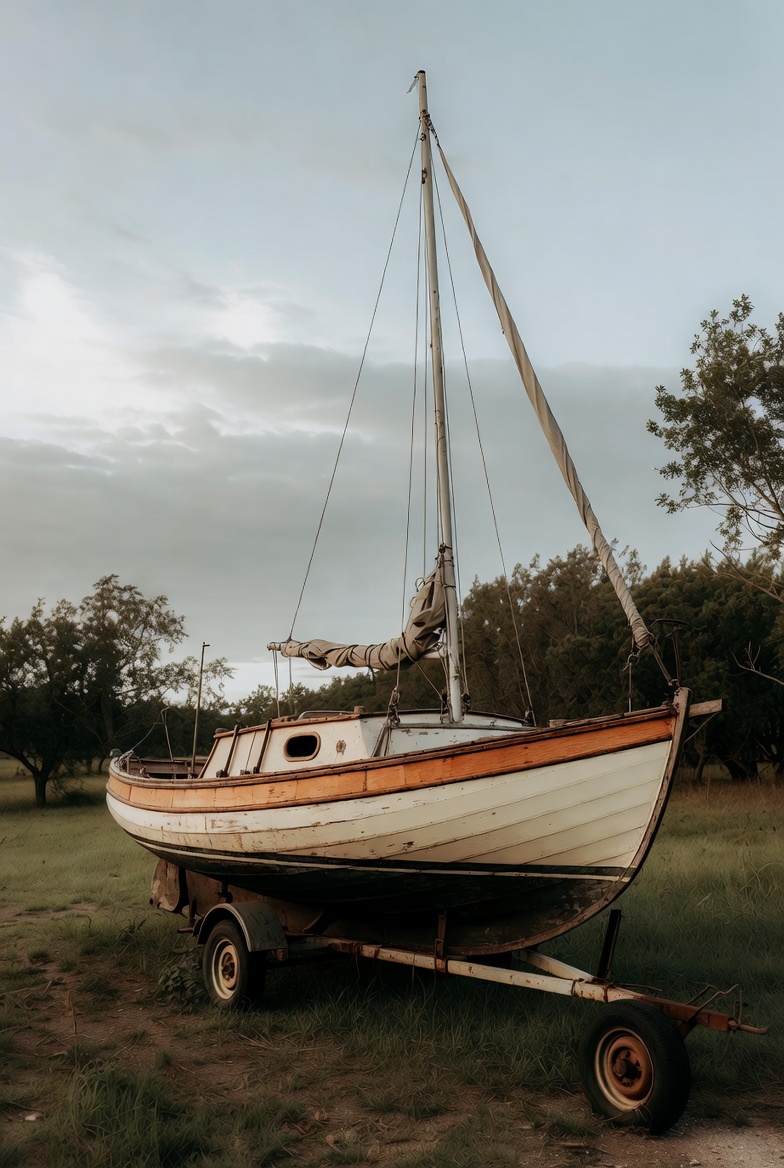
I have friends looking to buy trailer-able sailboats and they regularly ask me what to look for in a used boat. So here is a quick reference that I hope will help my friends as well as anyone that reads this article in purchasing a used sailboat. This is a general guide for trailer-able sportboats (keelboats), multihulls, and dinghies so disregard those items that do not apply to the boat you are looking at. If looking to buy a Hobie 16 or 14 click on the following link... Hobie 16 Blue Book!
Just a quick not on keelboat versus sportboat definition. Trailer-able keelboats are technically Sportboats. Keelboats are large, generally fixed keel sailboats that are moored/docked, not trailer-able other than via special transports on trailers only used to move boats professionally.
GETTING STARTED
The best way to purchase a great used sailboat is to take an expert with you. As a dealer of used and new sailboats it has been my sad experience to have people come to me after they have already bought a lemon of a boat wondering “now what?”
People will contact me with exciting news about buying a used sailboat for $500, only to discover after my assessment that their boat needs a lot of work that can have a high price tag. So, if you do not know what to look for in a boat, hire an expert or educate yourself through books, the internet, and articles like this. Even an expert in boat assessments will sometimes miss a trouble spot so realize when purchasing a used boat there are no guarantees that the boat will not have problems.
THE BOAT
The first thing to look at is the material the boat is made from such as wood, fiberglass, carbon-fiber, plastic.
With fiberglass check for chicken pox (or boat pox as some call it)/blistering! If a boat has the pox I would not buy it unless you absolutely love the boat and are willing to take maybe years to fix it or pay someone a lot to do the work. Typically, pox is caused by water passing through the gel coat with water saturating the fiberglass matting causing bumps. Basically, water gets through because the gel coat was originally sprayed poorly leaving gaps for water molecules to get through or someone has excessively sanded the hull making the gel coat too thin to protect the fiberglass matting. If you are looking at a boat in the water that does not have a trailer, either have a diver check the hull or have it hosted out to check for blisters, cracks, etc. If the boat had a professional bottom job done go talk with that individual who did the bottom job to see if he had to grind pox bumps off. Letting a boat sit out of the water too dry can take years to dry. The trick is, once water gets in the matting it is hard to get the water out and that is a whole other story for a future post. The point is if you can avoid purchasing a boat with the pox do so!
Besides checking for pox, check for spongy deck and hull. For decks that develop soft spots they develop where people walk the most. Hull soft spots can be seen via discoloration and surface deformities. Looking at a hull from an angle to let the light reflect to be able to see if there are ripples, dents, bulges, etc., a hull not looking uniformed.
Check for leaks at stanchions, chain plates, hull-to-deck joints (water runs down the inside), portholes, hatches, and windows, etc. Check for cracks around at the mast step and deck fittings, and particularly fittings that appear to be pulling out of the deck. Look for large gouges and cracks below the waterline.
If you are looking at a sportboat/keelboat check for cracks in the following locations: With swing keels look for cracks where the keel swings (pivot bolt area) inside and out. With fixed keels look at the areas at the top of the keel where it meets the hull, and if it has wings or a bulb check all the way around these structures as they have been known to fall off; if that happens while on the water it certainly will not make your day. Look for splitting along the edge of the keel.
Also look at the gudgeon and pintles (where rudder and stern meet) for wobbles when shaking the rudder when attached.
Major issues with the keel and other areas can be costly to repair.
Check scupper plugs (lets water out of boat when moving) and seacocks (valves that let water into the boat, such as for filling ballast tanks). Beware if they're seized open or there are major cracks around them as these issues will allow the boat to take on water. Ensure electric and manual bilge pumps work. Most trailer-able sportboats do not have manual or electric bilge pumps. I prefer boats without them.
Cross members
When it comes to purchasing a trimaran or catamaran there are a few extra things to look for. On trimarans check the Akas (beam from center hull to the outer hull/Ama) and on catamarans check the cross beams in particular where they meet the hulls for cracking. Small gel coat cracks are common but cracks over several inches long indicate there may be structural issues. Some small multihulls like the Hobie 16 have corner castings and those items also need to be checked for cracks (they are easy to replace on boats that are still in production). So, check the length of the beam, any attachment points, the mast step base, beam and bridge deck for cracking. You just want to make sure all looks structurally sound.
Daggerboards & Centerboards
A lot of multihulls and monohull dinghies have daggerboards, pull the dagger boards out and check for major impacts, if they do have major chunks out of the boards it’s a good idea to check the daggerboard trunks (where the board goes in) because if the daggerboard trunk is damaged the boat will normally take on water; fixing this area can be costly. With centerboards typically on monohulls the same applies but also check the pivot bolt area for damage. If the pivot bolt won’t come out (if that is an option, some pivot bolts do not come out) it probably means it was bent from a major impact. Also, if the centerboard is rubbing on one side of the board (see excessive wear on one side or both) when coming in and out of the hull this means the board needs to be realigned or again the pivot bolt is bent. If the centerboard has a lock down system or the sailor stalled the boat near shore and it drifted onto shore and there was wave action, the centerboard pivot area may have become damaged. So, pull the daggerboard out and pull the centerboard up and down to make sure all is in order. Do the same with a swing keel pull it up and down multiple times.
Rudders & Tiller
Check rudders for splitting and edge chips. Typically, the rubber is easy to fix but sometimes they just need to be replaced. The rudder housing, pintles, controls (up down lines, locking and releasing mechanism, limit screws) all should be checked for cracks, broken or bent items, and non-functioning items. If a rudder system is in production typically then of course it will be easy to replace parts but replacing the entire casting can be very costly. Wood tillers can be sanded or if bad enough one can be replaced by making one’s own at a low cost or buy from Rudder Craft. Carbon and even alloy tillers and extensions that need to be replaced can be again very costly.
Fiberglass, wood, concrete
Gel coats that are faded or have a lot of staining from being kept in the water without proper protection can be near impossible to restore to their original luster. You can either paint the boat or try to polish. Having a professional restore your boat to its original luster can be expensive but can still be a good option for those that want to have that new boat look. Re-applying gelcoat is expensive but a good option to make a boat look like new.
If you want a low maintenance boat, it’s best to stick with fiberglass. Wood boats are beautiful when kept up, but rot, splitting, and damage can be near impossible to locate without extensive and expensive work. Seasonal maintenance is also expensive. I have nothing against wood boats but one should know what they are getting themselves into.
Steel boats of course can rust, so you want to look at areas of rust, but remember it’s easy to paint over rust to hide problem areas. I have checked out a few concrete hulls over the years but honestly concrete is just too prone to cracking. Plus, there are no such thing as trailer-able concrete boats.
SAILS
I am always amazed when people buy boats without checking the sails. That is like buying a used car without checking the motor (the sail is your motor). Take all the sails out of their bags or where they are stored, lay them out in an area that will not get them dirty. If the boat is rigged (mast up), hook the sail(s) to the halyard(s) and raise it. Whether the sail is hosted up or laying down look for abrasions, broken slides, discoloration, chafing, repairs, and stitches that have pulled out. Sails left in areas that are moist can mildew, which can be harmless tough to remove. If sails are left to mildew too long it can breakdown the fabric making the sail prone to tearing. Sails will stretch, becoming baggy; spinnakers due to their lighter weight material become excessively baggy. The inexperienced sailor (even experienced sailors) will find it hard to tell if a sail is stretched too much so if the sail looks clean and well taken care of it should be fine for recreational sailing. Take the sail material in your hands and crumble the sail material back and forth in your hands... if the sail has a stiff feel and makes crackling sounds then it’s a pretty new or an unused sail. If it feels soft and makes no noise, it’s likely an old and very used sail.
Does stiff sail material make a difference? Would you fly an old biplane with fabric wings (fabric stretched over wood or metal wing framing) that was soft? The plane would not fly well, actually, would be dangerous to fly. Luckily with a sailboat you are not hundreds of feet in the air, however if you are sailing from point A to point B with soft sails it will take you much longer than if you had crisp sails. You may say "well I do not care how long it takes to sail to a destination," tell me that when you see a storm coming and you are trying to get to a safe harbor.
STANDING & RUNNING RIGGING
The most important area to look at I feel related safety is the wires ends. Check for unraveling and broken strains of wires. If any wire, particularly those that hold up the mast up, have any issues they absolutely must be replaced. Also check for worn pins and shackles (particularly those that are used to keep the mast up).
All lines that run the sails, called running rigging and, and dock lines, and lines/straps that keep the boat on the trailer (and those that tie you up to a dock or your trailer – not running rigging) must be in great condition, i.e. chaffing, cuts, broken threads, etc. Blocks, winches, and furlers should work smoothly with no cracked or broken items.
TEST SAILS & RUNNING RIGGING
If at all possible, raise/hoist the sails and run the lines (sheets and halyards) to make sure everything works properly. If the owner offers to take you for a sail that can be a good sign that the owner has confidence in his boat. Most people selling a used trailer-able sailboat are not going to take you sailing, so may not be a sign at all that they do not have confidence in the boat.
ELECTRICAL
If the boat has batteries on board, determine via a battery tester if the battery is charged. Depending on the age of the battery even if the charge is low, it should charge just fine.
I find most used boats batters are not charged or our bad, thus the only way to check the lights on a boat is to bring a battery along to test the lights and other electrical systems. This may sound like over kill but if the boat has a bad electrical system you will have to do a lot of work to replace the wires, etc. If mast lights and covers look foggy and cracked it’s probably time to replace them. Wires on and in the boat should not be loose, frayed, or corroded. The fuse panel(s) should not be corroded; check all fuses. The good news is the new LED lights and electrical system can be economical to purchase and easy to install. Some lights are not remote and require wiring such as on the new Malbec18 sportboats.
If the boat has an electrical bilge pump, make sure it turns on and actually works, and does not leak. If it’s an old bilge pump its likely time to replace it. Leaking in a boat you know is not good 😉. Or you can remove it all together and seal the hole via some fiberglass work and use a manual one, I prefer this on trailer-able sportboats related to low maintenance.
OTHER
Having a dodger or other canvas items on a boat is of course an added benefit. You should replace fogged plastic windows at your local canvas business. If the material is old, they may not do the work as new stitching will weaken the material creating tearing, thus they do not want to take on that responsibility.
Make sure safety equipment complies with government regulations and is in good condition. On most used boats I have inspected, the safety gear is not typically up to specification (At funtosail.com we will soon have a new safety gear page to help you determine your needs to be legal). In the galley, the propane or Compressed Natural Gas (CNG) should be installed properly.
Once you purchase a sailboat get a US Coast Guard or US Coast Guard Auxiliary (USCGA) or marine Sheriff inspection... when you are officially up to specification, they will give you a sticker to place on your boat that indicating so. The US Coast Guard Auxiliary does not have the authority to give you a ticket. I would also have the boat inspected my a sailboat dealer as in some areas the USCGA volunteers and new marine Sheriff deputies may not have knowledge about sailboats, so I always recommend getting the two inspections.
ENGINE
If the boat has an inboard motor or large outboard motors on the MacGregor 26 motor sailor, check the engine controls, cables and linkages; they should move smoothly. Do a battery load test if possible.
Parts can be hard to find for rare or old motors. Be aware of this if the motor is a big deal to you. Most trailer-able sailboats use outboard motors so it’s not a big deal to replace them other than cost, but with large outboards and inboard motors it can be quite expense to fix or especially replace or rebuild. Yes some rare trailer-able sportboats have inboard motors.
Do a Smoke Test to determine the health of a diesel motor - Diesel motors make small amounts of black smoke with some white on cold starts. Sick ones make blue or continuous white smoke. Diesel motors are generally preferred because they tend to be low maintenance if a strict schedule of oil changes is followed. Ask the owner for proof of maintenance history.
With inboard gas motors check for fuel leaks and a working bilge blower. Again, ask for maintenance records and if they have a spare parts kit for the motor. Common issues of gas engines are wet or worn-out electricals, bad points and plugs.
Again, with inboard motors check wobbly driveshaft. Not only does this indicate motor issues it could also cause water from outside the hull to get in.
Nice thing about outboard motors if you can take it off the boat and take it in for repair, etc. The theoretical hull speed of most trailer-able sailboat, particularly sportboats is 4-9 knots, so using an outboard above horsepower of 7 is not needed, as a higher horsepower will not make the boat go any faster than with less horsepower. I run a 4 hp outboard motor on my boat.
TRAILER
Let’s say you are looking at a trailer-able sportboat that is in good shape for $1000 without a trailer. You’re thinking you can find a used trailer for cheap. Used sportboat trailers are very rare and even rarer are ones that will fit the boat you are looking at no matter how common the boat design. A new trailer for a trailer-able sportboat will run $4500 to $7500. New sailboat trailers for shallow draft light weight boats are not as hard to get new or used since the trailers do not need the extensive hull and keel supports. Multihulls like Corsair trimarans and big catamarans need custom trailers, they’re not cheap. I do not indicate a good used price for a used sportboat trailer because prices vary greatly. If you do find a used one jump on it and buy it quickly as such used trailers are rare.
Sometimes you can buy a crap-used boat that is best thrown away, and they you can use the trailer. Such boats and trailers can be found at dry docks or on used for sale online boat sites like Craigs List. Such trailers can take some work to get to road worthy.
Sailing dinghies such as the Laser or Hobie 16 take a very simple trailer design such as converting a flatbed utility trailer. But of course, a trailer that is designed for the particular dinghy is best, and new ones can range in price from $1000-$2500 depending on the size of the boat. Used trailers in good condition vary greatly in price. “Like new” trailers will most likely run at near new prices, so buy new.
When buying a trailer, the wheels should be as big as possible to reduce wear and heat buildup. Trailer capacity should be well beyond what is needed to carry the boat (weight of boat, gear, motor, etc.). The trailer tongue should be long enough or extend to a length long enough to float the boat easily on and off the trailer so that all you have to do is winch the boat up the trail a couple of inches. The tail pipe on your vehicle should not have to get wet on any ramp if your trailer length is correct. Lights must be waterproof, specifically made for boat trailers. I highly recommend un-plugging your trailer lights before backing into the water so they can cool (if they are not LED lights) as sometimes they will burn out when hitting the cool water.
Remember cheap is not typically better. You want the best trailer possible to protect your new/used boat. Also, an improper fitting trailer can cause hull damage. Weakly built trailers such as a highly flexi trailer, can cause damage (not able to support the weight) and can cause the trailer to swerve on the road, and more etc.
THE SELLER/OWNER
Now it’s bargaining time! Typically, a seller really wants to sell their boat as quickly as possible because they are either getting a new/different boat or sad to say they our getting out of sailing (traitor, moving to a stink pot). With your list of negatives you created when you checked out the boat you are in a good position to make an appropriate bid. Always go with your low figure and work with a price you and the owner can both live with. You are probably wondering what the going prices are for a used sailboat. Typically, ready to sail trailer-able sportboats will sell for $1500 and on up, and dinghies $500 and on up on up to near new prices depending on the age. The best thing to do is an internet search to compare prices. I am kind of partial to Melbec18, Montgomery, Sage, Compact, Catalina 22’s (heavy boat), Sand Juan, J Boats, Rocket (sunfish like boat), Laser, Hobie 16, Hobie Wave as they tend to be durable and popular for a reason. I tend to lean toward in-production boats because it means typically, they are well liked, parts are readily available, and so on… and if you just want a shiny new one you can buy it.
HAPPY HUNTING
I really could go on and on until this post is super long, but the above items are what I view as the basics to check. I hope this article was helpful and I wish you all happy sailboat hunting!
It is up to you to make a good choice and not not this post. This is post is just a few guidelines we hope is helpful in your search for the right boat for you.
No part of this text and info, etc. may be reproduced, stored in a retrieval system, or transmitted, in any form or by any means, electronic, mechanical, photocopying, recording, or otherwise without prior written permission from FunToSail.com